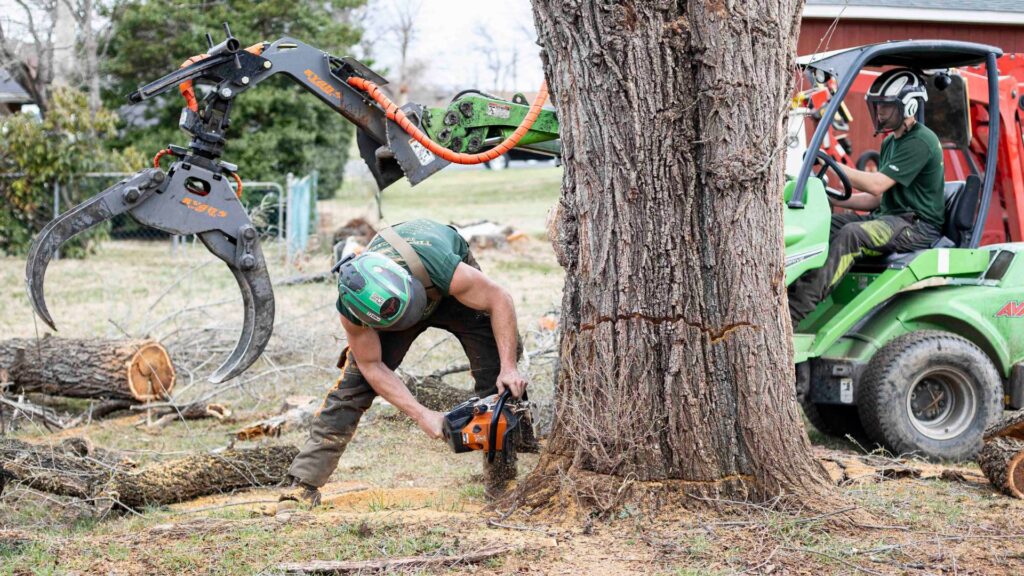
Tree removal may happen in a matter of hours, but a successful project starts well before the first cut. Access conditions, nearby structures, utility lines, and plans for the remaining stump all influence how the work should proceed. If stump removal is part of the project, discussing it in advance also helps determine what the site should look like once the tree is gone. A little preparation simply gives the tree care crew a clearer picture of the property and helps the work proceed according to plan.
At Timber Works Tree Care, we provide professional tree removal, stump removal, tree pruning, forestry mulching, and emergency tree services throughout Bluemont, VA. Our experienced team evaluates the tree and surrounding property before determining the appropriate equipment and removal approach. Call us today at (540) 254-5773 for a free project estimate or more information!
Below, we share six steps to prepare your property for a tree removal:
1. Confirm What Your Tree Removal Service Includes
First, make sure you understand where the tree removal service ends. Cutting a tree to ground level does not automatically mean the stump will be removed, and debris handling can vary according to the scope of the project. Likewise, tree removal cost can depend heavily on the tree’s size and condition, particularly when nearby structures make the work more complex. Confirming the scope beforehand gives you a clear understanding of what the property will look like after the crew leaves and what additional work, if any, still needs to be completed.
2. Create Enough Access for the Removal Crew
Next, consider how the crew will actually reach the tree. Tree removal may require specialized equipment, and a perfectly clear space beneath the canopy does little good if a narrow gate or blocked driveway prevents that equipment from reaching the work area. Before the appointment, relocate vehicles and movable outdoor belongings that could interfere with access. If there are septic components, soft ground, or other areas that heavy equipment should avoid, point them out before work begins so the crew can plan its approach accordingly.
3. Identify Features Around the Tree That Need Protection
Once the crew has access, take a closer look at the immediate work zone. A tree growing beside a fence, garden, patio, or other established landscape feature requires a different removal strategy than one standing in an open field. Make the crew aware of anything nearby that may not be obvious at first glance, particularly irrigation components or landscape lighting concealed below vegetation. Professional tree removal involves controlling how sections of the tree come down, but knowing what surrounds the work area helps the crew determine the appropriate rigging and handling methods.
4. Discuss Utilities and Structures Before Work Starts
In addition, trees near utility lines or buildings deserve careful attention before the crew begins their work. Overhead electrical lines can affect equipment positioning and removal methods, while underground utilities may become relevant if stump work or ground access is planned.
The same principle applies to a tree leaning toward a house or compromised by recent storm damage. An emergency tree removal may require a more cautious strategy because cracked trunks or partially detached limbs can behave unpredictably once work starts, making an advance assessment especially valuable whenever conditions allow.
5. Decide What You Want to Do With the Stump
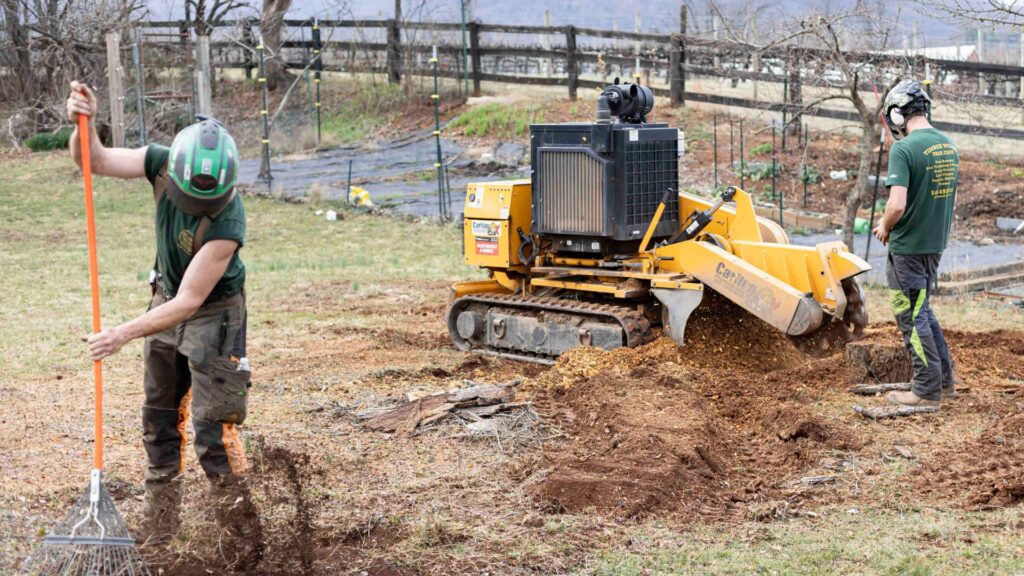
After the tree is down, the stump becomes the next decision. Arranging stump grinding as part of the original project can make sense when the area will eventually return to lawn, receive new landscaping, or serve another purpose. A stump left in place may interfere with those plans, while grinding it can reduce the remaining material below grade and make the area easier to reclaim. The tree’s root system will not simply disappear with the trunk, however, so future planting and construction plans should be discussed before deciding how the site will be finished.
6. Think About What the Property Needs After Removal
Finally, consider the reason the tree is being removed and what its absence will mean for the property. Healthy mature trees can contribute shade and visual character, so removing one without a clear reason does not automatically improve property value.
A severely declining or structurally hazardous tree presents a different calculation, particularly if it threatens a home or limits better use of the surrounding landscape. Overall, a professional evaluation can help distinguish a tree that genuinely requires removal from one that may benefit from pruning or another form of corrective care.
Plan Ahead for Professional Stump Removal in Bluemont, VA
Bluemont, VA, stump removal is only one part of planning what happens before and after a tree comes down. At Timber Works Tree Care, we evaluate access, tree condition, surrounding property features, and the site’s future before recommending an approach. Our careful preparation gives our team the information needed to complete the project efficiently while leaving you with a property that is ready for whatever comes next. Call us today at (540) 254-5773 for a free project estimate or more information!