
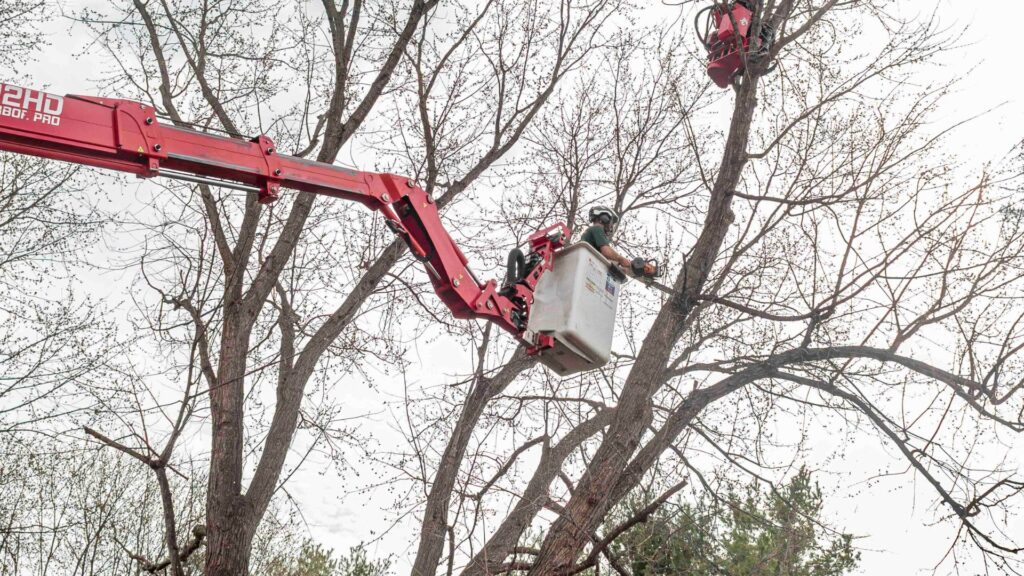
A tree does not benefit from pruning simply because someone has a saw and a free Saturday. Instead, its species, growth cycle, and current condition all influence when pruning will be most beneficial. Therefore, before scheduling tree branch removal, it is important to understand how Virginia’s changing seasons affect common trees and when a damaged or hazardous branch warrants attention regardless of the calendar.
Timber Works Tree Care provides comprehensive tree care services throughout Northern Virginia, including professional tree trimming, pruning, hazardous branch removal, full tree removal, and 24/7 emergency storm response. In addition to routine maintenance, our team is equipped to handle complex or high-risk situations such as storm-damaged trees, overgrown canopies, and structurally compromised limbs that require immediate attention. Call us today at (540) 254-5773 for a free project estimate!
Below, we share a calendar for when to prune your trees in Virginia:
Winter: Take Advantage of the Dormant Season
For many established deciduous trees, winter offers an excellent opportunity to address structural concerns. Once the leaves have fallen, previously concealed branch patterns become much easier to evaluate. Arborists can then identify problematic growth and determine where selective pruning may improve the tree’s long-term structure. Furthermore, winter dormancy is noted by professionals as the preferred pruning period for established trees.
For that reason, homeowners searching for tree trimming near them during the colder months may be arriving at an especially useful time for an assessment. Since the tree is dormant, structural pruning can take place before vigorous spring growth begins. However, winter is a general guideline rather than a universal rule. Certain species, particularly flowering trees, benefit from a different schedule.
Spring: Give Flowering Trees Time to Bloom
As temperatures rise, timing becomes particularly important for trees valued for their spring flowers. Several ornamental species form their flower buds on wood produced during the previous growing season. Consequently, pruning those branches during winter or immediately before bloom can remove flowers before they ever have the opportunity to open.
Instead, these trees may be better candidates for pruning after their flowers have faded. This approach allows homeowners to enjoy the seasonal display before appropriate branches are addressed. More importantly, it illustrates why identifying the tree’s species should precede pruning decisions. The arrival of pleasant spring weather may make yard work considerably more appealing, but the tree’s biology remains a better scheduling system than the weekend forecast.
Summer: Keep Routine Pruning Selective
Once summer arrives, a tree’s canopy is actively supporting photosynthesis and energy production. Removing a substantial amount of healthy foliage during this period can interfere with that process, particularly if the tree is already experiencing environmental stress. Nevertheless, summer pruning can have specific applications. It may even be used to suppress certain foliage or sucker growth when there is a clear reason for doing so.
Accordingly, summer work should generally be deliberate rather than aggressive. An assessment can determine whether a particular branch should be addressed immediately or whether the work can reasonably wait for dormancy. Storm damage, however, changes the priority. If severe weather leaves a branch broken or structurally compromised, postponing necessary work until winter simply to satisfy the calendar makes little sense.
Fall: Be Conservative With Nonessential Pruning
By fall, trees are beginning their transition toward dormancy, but that does not automatically make it the ideal season for a major trim. In fact, professionals have even cautioned against pruning in late summer and early fall because cuts may stimulate tender new growth. If that growth does not have sufficient time to harden before temperatures drop, it may become vulnerable to winter injury.
Therefore, there is no single set of months during which every tree should remain untouched. The better approach is to distinguish necessary work from pruning that can wait. Routine structural maintenance can often be postponed until dormancy, while damaged or dangerous branches deserve more immediate attention. Likewise, evergreens have species-specific requirements, so the changing leaves elsewhere in the yard should not determine their pruning schedule.
Year-Round: Safety Concerns Do Not Follow a Seasonal Calendar
Of course, ideal pruning windows become secondary when a branch creates a legitimate safety concern. Dead limbs above a driveway or branches with significant storm damage require a different calculation from healthy growth that simply needs routine maintenance.
Moreover, structural damage is not always easy to evaluate from the ground. A branch can remain suspended in the canopy despite a compromised attachment, while cracks near major unions may indicate concerns that warrant closer inspection. In these situations, waiting several months for the theoretically perfect pruning season may create unnecessary exposure to failure. Seasonal timing matters, but the tree does not check the calendar before dropping a damaged limb.
Plan Tree Branch Removal in Ashville, VA with Timber Works
Professional tree branch removal in Ashville, VA, should reflect the species, condition, growth cycle, and reason the branch needs attention. Timber Works Tree Care provides professional pruning and hazardous limb removal, along with complete tree removal and emergency tree services throughout Northern Virginia. Call us today at (540) 254-5773 for a free project estimate or more information!